Shop No: O-113, Addela Mart, Raksha Addela, Gaur City -2 Sector-16C, Noida Extension, Greater Noida West, 201009, Greater Noida

Acne TreatmentADHD TreatmentAll Hair Conditions TreatmentAllergic Rhinitis Treatment+46
8853920440Thuja occidentalis (white cedar)
Thuja Occidentalis uses in homeopathy: a key remedy for warts and skin growths, oily skin and certain chronic conditions, its symptom picture, common potencies, FAQs — informational, consult a homeopath.
Quick answer
What is Thuja Occidentalis used for in homeopathy?
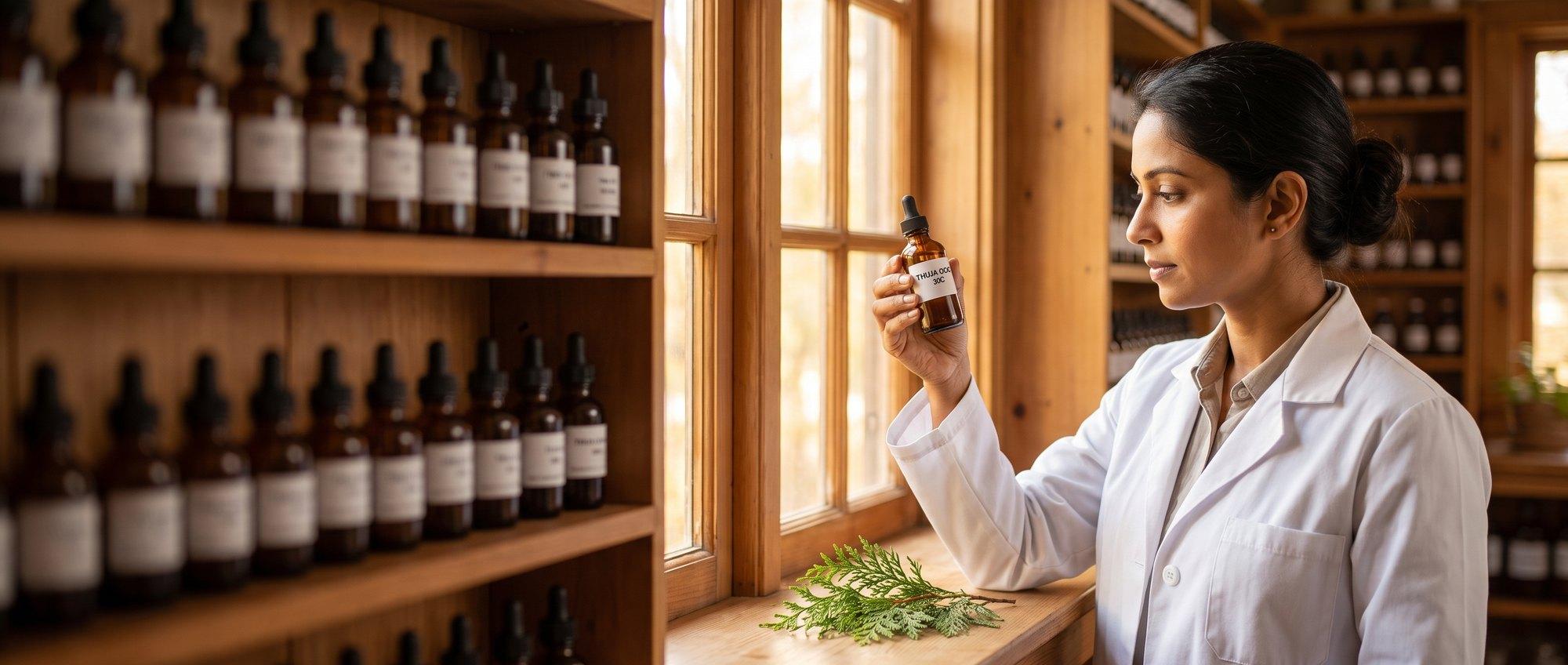
Thuja Occidentalis, from the white cedar tree, is the homeopathic remedy most associated with warts and skin growths, oily skin, and a range of chronic complaints with a characteristic constitutional picture.
Reviewed & updated: June 2026
This is general information about a homeopathic remedy, not a prescription or dosing advice. In homeopathy the correct remedy and potency are chosen for the whole individual symptom picture by a qualified homeopath — the same remedy is not right for everyone. Do not self-medicate, and consult a qualified homeopathic doctor (and your physician for serious or persistent conditions) before taking any remedy.
Homeopaths look for these guiding features when considering Thuja Occidentalis.
Thuja is commonly referenced in 30C and 200C; potency and suitability are decided by your homeopath.
Thuja Occidentalis, from the white cedar tree, is the remedy most associated in homeopathy with warts and skin growths on the skin and mucous membranes, along with oily skin and offensive secretions. Its constitutional picture often includes fixed ideas, a feeling of being fragile or unlovable, complaints that tend to be left-sided, and symptoms worse from damp, cold weather and at night. Like any homeopathic indication, this is a recognisable pattern, not a diagnosis, and it fits only some of the people experiencing such complaints.
Choosing the right remedy and potency means matching the whole individual - the constitutional picture and the modalities - which is the assessment a qualified homeopath is trained to make, so the same name does not suit everyone with similar symptoms. Use this page as background reading rather than a prescription, and do not self-select a potency. Persistent, changing or bleeding skin lesions should be medically checked; homeopathy is best used as a supportive, individualised approach alongside appropriate care.
In homeopathy Thuja is most associated with warts and skin growths and oily skin, along with certain chronic constitutional complaints. The right remedy depends on the whole case.
It is the most-considered homeopathic remedy for warts when the Thuja picture fits, but persistent, changing or bleeding skin lesions should be medically checked.
It is used internally as a constitutional remedy; selection and potency are clinical decisions for a homeopath.
No — consult a qualified homeopath for the correct remedy and potency.
The right remedy and potency are chosen for your individual case. Book an online or in-clinic consultation with a qualified homeopath.
Shop No: O-113, Addela Mart, Raksha Addela, Gaur City -2 Sector-16C, Noida Extension, Greater Noida West, 201009, Greater Noida
F 228, 2nd Floor, Sushant Shopping Arcade, B Block, Sushant Lok 1, Gurgaon, Gurgaon
PF -23, First Floor, TOT Mall, C Block, C Block, Sector 62, Noida, Uttar Pradesh, 201301, Noida
Use your location to see the closest verified homeopathy clinics and book an online or in-clinic consultation.
Have a question? A verified homeopath will answer it. General guidance only — not a substitute for a consultation.